

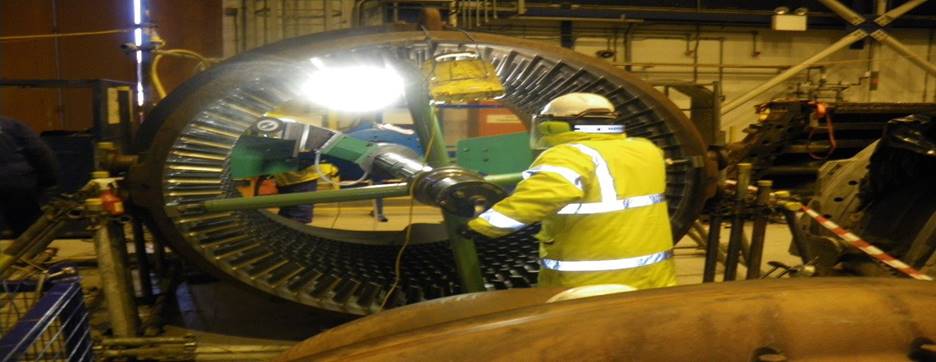
Due to varying renewable energy needs, the power-generating sector is always under pressure to meet changing energy requirements. As a result, combined-cycle plants are becoming the primary source of reliable power generation. And they are expanding in size and number.
Because of this, the multitude of industrial gas turbines in operation keeps growing. Over the past 50 years, their technology has advanced dramatically. This is to keep up with ever-increasing demands.
Manufacturers are forced to create considerably bigger turbines that are intended to run continuously. As a result, industrial gas turbines that operate in these conditions need rotor repair services regularly. This requires a significant amount of skill, accuracy, and capital equipment expenditure.
It is crucial to comprehend the maintenance as well as repair process. To carefully examine the facilities, tools, knowledge, and accuracy needed for both maintenance and highly specialized repairs. You must choose the best professional service.
A one-stop shop where maintenance professionals can do a full restoration. Covering every stage of the process is necessary for turbine operators.
Careful Inspection Procedure
Shortly before dismantling rotors, the balance machine may detect any received imbalance concerns. This is the first step in the procedure. Experts constructed a specially designed dynamic balancing equipment that can balance rotors weighing up to 180,000 pounds.
Following the initial balancing run, the rotor is put onto V-blocks (run-out supports). And spun by hand for smaller rotors or a hydraulic belt-drive unit. This enables the completion of all necessary measurements and inspections, as well as a visual evaluation.
The outcome of these preliminary examinations will establish whether it ought to be dismantled. This starts with flipping it over and putting it in a collecting pit. Unlike scaffolding, placing a rotor in a collecting pit offers a sturdy operating platform that protects fragile rotors.
Crane capacity has always been a limiting concern at most sites due to the length and weight of modern equipment. For instance, a 100-ton crane with a 50-foot height capability may separate the compressor and turbine sections. Then, remove the individual compressor or components.
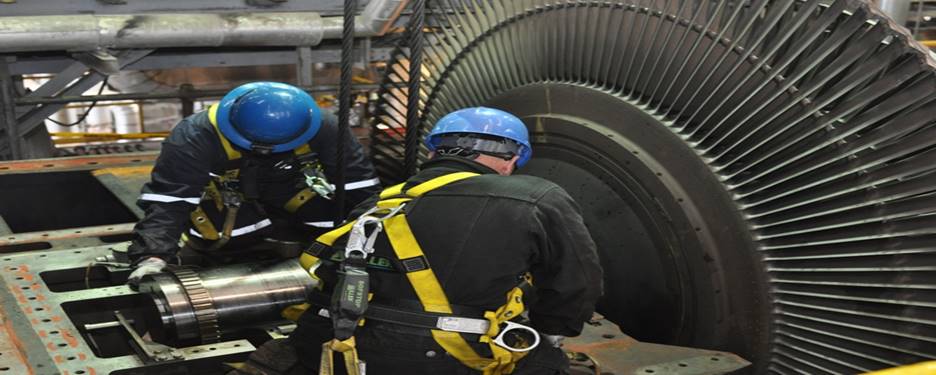
After being dismantled, the individual parts are examined. For reuse or specific upkeeps like changing coating, compressor disks, or blades. Every component is carefully inspected and evaluated. Before being put back together. The individual disks undergo concentricity checks as well as are balanced on a horizontal balance stand.
The Method of Repair
To prolong the life of a broken or deteriorated part and prevent expensive power plant downtime. Maintenance is a painstaking, multi-step procedure – click https://inspenet.com/en/articulo/effects-of-plant-shutdowns-environment/#toc_heading-2 to read further.
It entails using specific methods and following stringent industry requirements for dependability and safety. Because of the weight and size of the components. A thorough patch-up procedure is usually carried out in a specialist facility and consists of the following steps:
- Initial Assessment along with Documentation: Upon arrival, the condition is evaluated, frequently involving a preliminary balancing check to find problems before disassembly.
- Disassembly and Cleaning: To ensure complete access and cleaning of internal components. The rotor is meticulously dismantled (unstacked) into its component pieces (disks, blades, etc.).
- Inspection and Non-Destructive Testing, or NDE: To find flaws, wear patterns, fractures, and microstructural degradation. Every component is carefully inspected utilizing cutting-edge NDE techniques. Such as eddy current array exams and phased array techniques.
- Engineering Analysis: The findings of the inspection are used to map the damage and guide the creation of a customized reparation plan. This may involve a life assessment to estimate the number of hours that will remain in operation.
- Advanced Repair Approaches: To fix components, a variety of approaches are used:
- Welding: To restore material characteristics and fix structural integrity. Specialized welding techniques, like laser cladding or electron beam, are employed.
- Machining and Grinding: Blades and vanes are restored to essential tolerances along with aerodynamic profiles by precision machining and grinding.
- Heat Treatment: To guarantee appropriate metallurgical and mechanical qualities, post-weld heating procedures are essential.
- Coatings: To improve performance and durability, protective coatings are used, such as thermal barrier or erosion-resistant ones.
- Reassembly and Balancing: To prevent vibrations and guarantee smooth performance. The rotor is re-stacked and goes through a multi-stage dynamic balancing procedure. That’s after individual parts have been certified and perhaps balanced.
- Final Inspection & Testing: Before being given back to the client, the entire, refurbished component is carefully examined. This is to make sure it satisfies all OEM and industry requirements.
Benefits
- Environmental Benefits: Repairing requires fewer resources than producing new parts – learn more about this issue.
- Extended Lifespan: Aging turbines can have a significant increase in operating life through repairs as well as life extension initiatives.
- Increased Efficiency: A balanced and well-maintained rotor runs more smoothly.
- Decreased Downtime: By preventing catastrophic failures, proactive repairs reduce unplanned and expensive outages.
- Enhanced Efficiency: Smooth surfaces and restored clearances decrease heat. It also reduces friction, consumes less fuel, and increases power output.
- Improved Reliability & Safety: Safe, dependable operation is ensured by early identification of problems (such as blade lift/spread). This prevents serious failures.